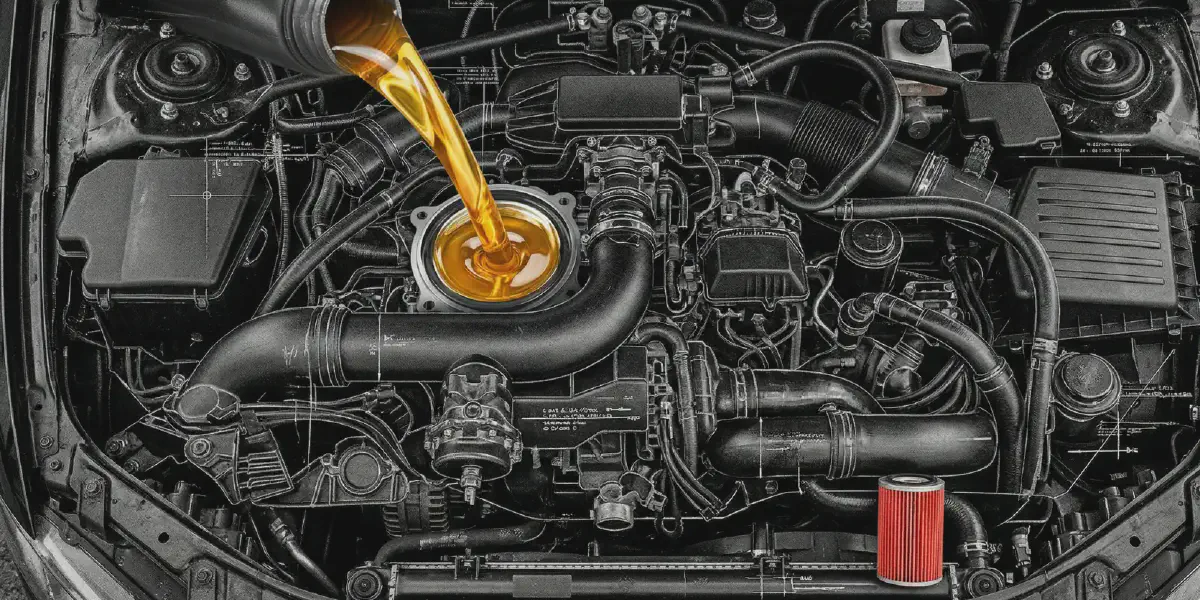
I see it every single day. A customer rolls into my shop with an engine that sounds like a box of rocks, and they tell me, “But Ray, the dealer said I could go 10,000 miles between services!” Listen to me closely: if you’re getting an oil change in Newark NJ, you need to throw that owner’s manual out the window. Newark is the definition of “Severe Service” driving. Between the idling on the Pulaski Skyway and the short trips in the North End, your oil is working ten times harder than a car driving on a flat highway in the Midwest.
Why Newark Driving is “Severe Service” for Your Engine
An oil change in Newark NJ is required every 3,000 to 5,000 miles, as urban driving conditions—characterized by frequent idling and short trips—qualify as “Severe Service” according to most vehicle manufacturers. Industry data shows that engines idling in heavy traffic can accumulate wear equivalent to 2,000 miles of highway driving for every 30 hours spent in a Newark gridlock.
When you’re stuck in stop-and-go traffic on Broad Street, your odometer isn’t moving, but your engine is still running. It’s getting hot, and the oil is starting to break down. Even worse are the short trips. If you only drive a mile to the corner store and back, your oil never gets hot enough to burn off the moisture and raw fuel that naturally leaks into the crankcase. That turns your oil into a nasty sludge that’ll clog up your engine faster than a Newark pothole pops a tire.
The 5,000-Mile Rule: Ray’s Brick City Standard
Vehicle owners seeking an oil change in Newark NJ should prioritize a 5,000-mile interval when using full synthetic oil, as Northern New Jersey’s extreme temperature swings (from 15°F in January to 95°F in August) rapidly degrade standard conventional lubricants. Statistics from the Car Care Council indicate that regular oil changes can extend engine life by over 100,000 miles compared to vehicles that follow extended “marketed” intervals.
I don’t care what the computer on your dash says. Those “Oil Life Monitors” are just algorithms based on how the car thinks you’re driving. They don’t know you’re sitting in 90-degree heat for 45 minutes trying to get through the Ironbound. My rule for Newark is simple: 5,000 miles if you use full synthetic, and 3,000 miles if you’re using a blend or conventional oil. It’s the cheapest insurance policy you can buy for your car.
Synthetic vs. Conventional: What’s Best for Newark?
Choosing the right lubricant for an oil change in Newark NJ involves understanding the benefits of full synthetic oil, which offers 50% better protection against heat-related engine sludge in urban environments. While synthetic oil can cost $20 to $40 more per service, regional automotive experts agree that the increased durability and improved fuel economy offset the initial investment within the first year of city commuting.
Look, I know money is tight. But if you’re driving a car built after 2010, you really should be using full synthetic. Modern engines have tiny oil passages that can get clogged by the “wax” found in conventional oil. In the winter here in Jersey, synthetic oil flows much faster when you first turn the key on a cold morning. That’s when 90% of engine wear happens—in those first few seconds before the oil gets to the top of the engine.
The DIY vs. Pro Debate: Is it Worth Doing it Yourself?
While performing a DIY oil change in Newark NJ can save approximately $30 in labor, the environmental regulations and lack of proper disposal sites in Essex County make professional services a more practical choice for many residents. New Jersey state law requires all service stations that sell oil to accept used oil for recycling, but the specialized equipment used in a professional shop ensures that the drain plug and filter are torqued to factory specifications.
I love a guy who wants to work on his own car. But let me tell you, doing an oil change on a Newark street isn’t easy. You’ve got the wind blowing grit into your open engine, and you’ve gotta find a way to get rid of that old oil without making a mess on the curb. Most of the time, by the time you buy the oil, the filter, and the tools, you’ve spent more than a local shop would charge you for the whole job. Plus, a pro will check your tires, brakes, and belts while they’re under there.
Conclusion: Keep the Lifeblood Clean
An oil change in Newark NJ is the single most important thing you can do to keep your car out of my shop for a major repair. Don’t push your luck with those long intervals. Your engine is the heart of your ride, and oil is the blood. Keep it clean, and your car will keep you moving through the Brick City for years to come.
Take care of your machine, and it’ll take care of you.
See you around the neighborhood.