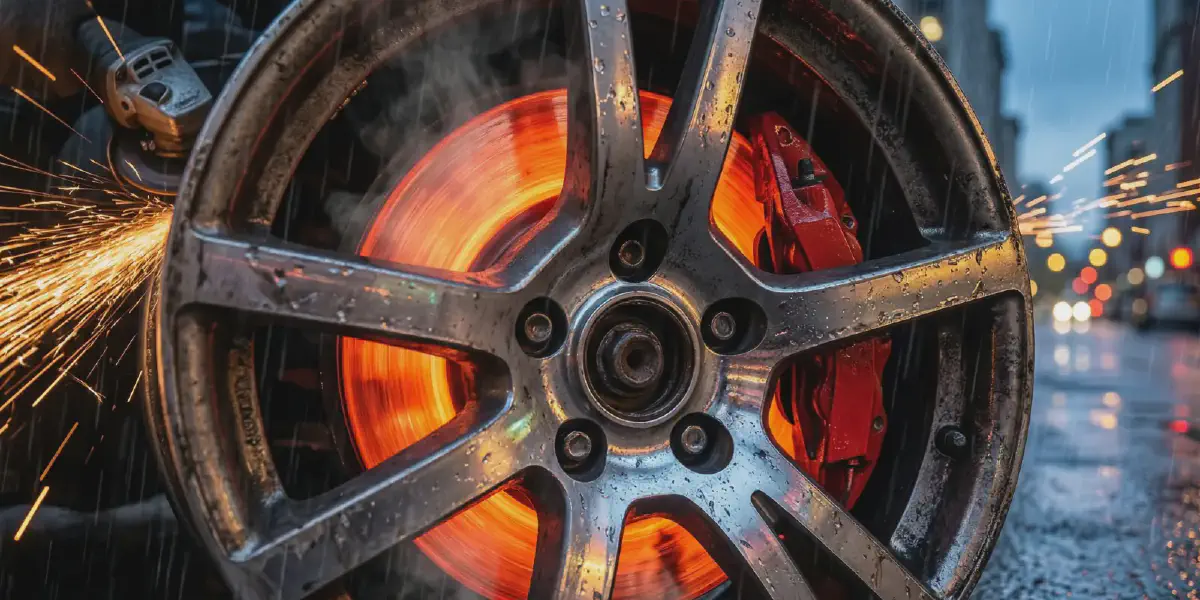
If you’re driving in Newark, your brakes are under constant assault. Between the red-light cameras on Broad Street and the gridlock surrounding the Prudential Center on game nights, your pads are getting hammered. Getting a brake repair in Newark NJ isn’t just about stopping; it’s about survival in some of the most congested traffic in the country. If you hear a squeal or feel a pulse in the pedal, your car is trying to tell you something before you end up in the trunk of the guy in front of you.
Why Newark Driving is a War Zone for Your Brakes
Brake repair in Newark NJ is often required 25% sooner than in rural areas due to high-frequency stopping and the corrosive impact of winter road salts used throughout Essex County. Data from municipal traffic studies shows that urban drivers apply their brakes up to 50 times per mile during peak Newark congestion, leading to accelerated heat cycles that degrade friction materials.
In the 22 years I’ve been doing this, I’ve seen brake pads in Newark wear out in half the time they would anywhere else. We’ve got hills in Vailsburg that’ll cook your rotors if you ride the pedal, and the stop-and-go on the way to Jersey Gardens is a nightmare. Heat is the enemy of your brakes, and Newark traffic is a furnace. When those pads get hot, they glaze over, and that’s when you lose your stopping power.
Squeals, Grinds, and Shudders: The Sounds of Trouble
Common warning signs for brake repair in Newark NJ include high-pitched squealing from wear indicators, metallic grinding indicating worn pads, and steering wheel vibrations caused by warped rotors. A study by the Car Care Council indicates that ignoring these early warning signs can increase repair costs by 300% as simple pad replacements escalate into full rotor and caliper overhauls.
Don’t be the guy who thinks that “squeak” is just a bird caught in the wheel well. That’s the wear indicator—a little metal tab designed to scream when your pads are low. If you ignore it, you move on to the “grind.” That’s metal-on-metal. At that point, you’re not just replacing pads; you’re buying new rotors because you’ve gouged deep trenches into the old ones. It’s the difference between a $150 job and a $600 nightmare.
What Should a Brake Job Cost in Brick City?
The average cost for a professional brake repair in Newark NJ ranges from $150 to $350 per axle for pads, while a full service including rotors typically falls between $400 and $800. Regional labor rates in Northern New Jersey average $110 to $160 per hour, meaning that choosing a shop with transparent flat-rate pricing can save you significant money on standard maintenance.
I get people coming in all the time asking for “the cheapest brakes you got.” Listen, in Newark, “cheap” can be dangerous. Those $20 pads you see online? They’re made of compressed dust and prayers. They’ll last three months before they’re gone. I always recommend a high-quality semi-metallic or ceramic pad for Newark drivers. They handle the heat better and won’t leave your wheels covered in black soot after three days of driving.
Ray’s Guide to Making Your Brakes Last Longer
To extend the life of your brakes in an urban environment, drivers should utilize engine braking where appropriate, maintain a 3-second following distance to avoid sudden stops, and ensure regular brake fluid flushes every 2 years. According to AAA, proper driving habits can extend the life of brake components by up to 20,000 miles, even in high-traffic cities like Newark.
Look, I know how we drive here. If you’re not on the bumper of the car in front of you, someone’s gonna cut you off. But if you’re constantly “pumping” the brakes, you’re just throwing money out the window. Try to anticipate the light. If you see it’s red at the next block, take your foot off the gas and coast. Your wallet will thank you.
Conclusion: Don’t Gamble with Your Stopping Power
Brake repair in Newark NJ isn’t something you put off until next month. When you’re merging onto the Parkway or trying to navigate the mess near Penn Station, you need to know that car is going to stop when you hit the pedal. Trust a pro, use good parts, and keep your ears open for those warning signs.
The streets in Brick City are tough, but your car can handle ’em if you take care of the basics. Don’t wait for the grind.
Catch you on the next one.